

Roshi Product Knowledge
What Do Standing Feet Mean in a Love Doll?
Quick Answer
Standing feet are reinforced foot options that may help a love doll stand briefly with support for display, dressing, photography, or careful handling.
They do not mean the doll can safely stand anywhere, by itself, for as long as you want. That is the mistake buyers need to avoid.
The practical difference is this:
- normal feet usually look the most natural but are not designed for upright standing pressure
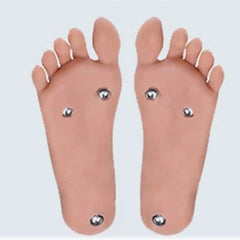
- standing feet with bolts use visible support points in the soles
- bolt-free or hard standing feet aim for a cleaner look, but still need clear safe-use guidance
If you are choosing this option, do not ask only "Can it stand?" Ask: how is the foot reinforced, what surface is safe, how long can it be positioned upright, and does the seller explain support, shoes, floors, and storage limits?
What Standing Feet Actually Mean
Standing feet are not one universal part. In the love doll market, the phrase usually describes a family of foot designs that help the body handle more upright pressure than normal soft feet.
That pressure matters because a full-size doll is heavy. When the body is upright, weight transfers through the legs, ankles, soles, and sometimes the foot hardware. A pretty product photo can make standing look simple, but the real ownership question is more practical: where does the weight go, what protects the foot, and what keeps the doll from tipping or stressing the joints?
So the feature is best understood as a support and display aid, not a magic balance system.
Standing feet may be useful when you want:
- short supported display
- easier dressing or shoe fitting
- upright photography with careful support
- a more stable moment while repositioning the doll
- less pressure on soft soles during brief upright use
They are not a replacement for common sense, a stable stand, a wall, a support hook, careful handling, or safe storage habits.
The Three Foot Options Buyers Usually See
Most buyers are really comparing three paths.
| Foot option | What it usually means | Best for | Main caution |
|---|---|---|---|
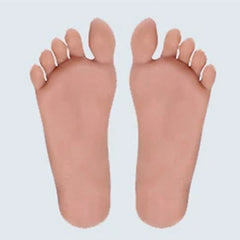
| Normal feet | Soft, more natural-looking feet without special standing support | Buyers who prioritize barefoot appearance and do not need upright display | Not intended for standing pressure |
| Standing feet with bolts | Support points or bolts are visible under the soles | Buyers who want a more obvious standing-support structure | Bolts can affect barefoot look, floor contact, and shoe choice |
| Bolt-free / hard standing feet | Reinforced or firmer standing design with a cleaner sole appearance | Buyers who want a smoother look while keeping some standing support | Cleaner appearance does not automatically mean safer standing |
The exact design still depends on the seller and model. Two products can both say "standing feet" and still use different construction, different sole firmness, different hardware, and different safe-use rules.
This is why product-page clarity matters. A clear seller should explain the type of standing feet, not only list the upgrade name.
With Bolts vs Bolt-Free: What Actually Changes
Visible bolts are easy to misunderstand.
Some buyers see bolts and think they are ugly, cheap, or unfinished. In reality, bolts are usually part of the support design. They create harder contact points under the feet so the doll is not placing the same pressure on a fully soft sole.
The tradeoff is appearance. With-bolt standing feet can be more obvious when the doll is barefoot. They may also require more thought around floors, shoes, socks, or mats because the contact points can be harder than the surrounding foot.
Bolt-free standing feet are different. They are often chosen because the sole looks cleaner and more natural. That can be useful for photos, display, or buyers who care about barefoot appearance. But bolt-free does not automatically mean stronger, safer, or better. It only means the visible hardware is not the same.
The better question is not "Are bolts good or bad?" The better question is:
| Buyer priority | Better starting point | Why |
|---|---|---|
| Clear support structure | With-bolt standing feet | The support points are visible and easier to understand |
| Cleaner barefoot look | Bolt-free or normal feet | The sole may look more natural |
| Short supported display | Either standing-foot type | The seller's safe-use limits matter more than the label |
| Long-term upright storage | Neither label is enough | You need support guidance, not just standing feet |
| Floor protection | Ask before choosing | Bolts, hard soles, shoes, and floor type all matter |
If a product page says bolt-free standing feet but gives no explanation of construction or safe use, treat the cleaner look as a visual benefit, not as evidence of better engineering.
What Standing Feet Can And Cannot Do
Standing feet can make certain moments easier. They can help the doll hold a more upright position during short, supervised use. They can make dressing, shoe fitting, or photography more manageable. They can also reduce direct pressure on soft soles compared with trying to stand a doll on normal feet.
But standing feet cannot remove the basic realities of weight, balance, and material stress.
They do not guarantee:
- safe unsupported standing
- safe long-term upright storage
- zero ankle stress
- no floor marks
- no sole wear
- no need for shoes, mats, or support
- identical performance across all brands
This does not make the feature bad. It simply means the feature should be used honestly.
Think of standing feet like a helpful support option. It expands what you can do carefully. It does not turn the doll into a freestanding mannequin with no risk.
Who Should Choose Standing Feet?
Standing feet make the most sense when you have a real use case for upright positioning.
You may want standing feet if:
- you plan to take standing or upright photos
- you want easier dressing while the doll is supported
- you expect to use shoes or boots often
- you want short display moments with careful support
- you understand that standing feet still require supervision and safe surfaces
You may not need standing feet if:
- you mainly store the doll lying down or seated
- you care most about natural barefoot appearance
- you do not plan to position the doll upright
- you are uncomfortable managing floor, shoe, or support precautions
- you expect the option to make standing risk-free
For a first-time buyer, the safest mindset is simple: choose standing feet only if you know why you need them. If the feature does not match your real ownership habits, a cleaner or simpler foot option may be enough.
Care And Safe Use Checklist
If you choose standing feet, use them with a careful routine.
- Keep upright positioning short and supervised unless the seller gives stronger model-specific guidance.
- Use a stable surface and avoid slippery floors.
- Consider shoes, socks, soft mats, or floor protection when bolts or hard soles are involved.
- Do not drag the feet across the floor.
- Do not leave the doll leaning in a way that twists the ankles.
- Avoid long-term upright storage unless the seller clearly supports it.
- Check the soles and ankle areas for stress after use.
- Keep foot and sole areas dry after cleaning.
- Do not assume a product photo shows a safe storage position.
The goal is not to be nervous. The goal is to respect where the weight goes.
Most damage risks become easier to manage when you remember that standing feet are a support feature, not a balance guarantee.
What To Check On A Product Page
Before choosing the option, look for clear answers.
- Does the page say normal feet, standing feet with bolts, or bolt-free standing feet?
- Are the support points visible in photos?
- Does the seller explain whether shoes, mats, or floor protection are recommended?
- Does the page explain safe standing duration or support requirements?
- Are standing feet included by default or sold as an upgrade?
- Does the body weight make upright handling realistic for you?
- Does the seller separate standing feet from skeleton upgrades?
- Is there any care warning for soles, ankles, or long-term storage?
If the page only says "standing feet" with no further detail, ask before buying. The answer matters more than the label.
How Standing Feet Connect To Skeleton, Shoes, And Storage
Standing feet are related to the skeleton, but they are not the same feature.
The skeleton is the internal frame that supports the body and controls movement. Standing feet are a foot-level support choice. A doll can have an upgraded skeleton without the standing-foot option, and a standing-foot option does not automatically mean the whole body is safe for unsupported standing.
For a deeper explanation of the internal frame, read What Is a Love Doll Skeleton?.
Material also matters. Softer materials can make soles and surface care feel different from firmer materials, and care routines vary. For material tradeoffs, read TPE, STPE, and Silicone Love Dolls: Which Material Should You Choose?.
Shoes and storage deserve their own attention too. Shoes may protect the sole and improve the look, but they can also add pressure, dye-transfer risk, or fit problems depending on the material and design. Storage should be planned around support, weight, privacy, and care, not around one feature name.
The smartest buying decision is not "standing feet or not?" It is "how will I actually handle, display, protect, and store this doll?"
In Short
Standing feet are reinforced foot options that can help with short supported standing, display, dressing, and photography. They are useful, but they are not a promise that a love doll can safely stand unsupported for long periods.
With-bolt standing feet make the support structure more visible. Bolt-free or hard standing feet can look cleaner. Normal feet often look the most natural. None of these choices is automatically best.
Choose based on your real ownership plan: appearance, floor protection, shoe use, handling effort, storage habits, and whether the seller clearly explains safe-use limits.
FAQ
Can a love doll stand by itself with standing feet?
Not safely as a blanket rule. Standing feet may help with short, supported upright positioning, but they do not automatically make long-term unsupported standing safe.
Are standing feet with bolts better than bolt-free standing feet?
Not always. With-bolt feet make the support points visible and easier to understand. Bolt-free feet can look cleaner. The better choice depends on appearance preference, safe-use guidance, floor protection, and how the exact product is built.
Do standing feet damage floors?
They can if hard bolts or soles contact sensitive flooring without protection. Use shoes, socks, mats, or other floor protection when needed, and ask the seller what they recommend for the model.
Are standing feet included with an advanced skeleton?
Not automatically. Skeleton type and standing feet are separate checks. Always confirm whether standing feet are included, optional, or unavailable.
Should first-time buyers choose standing feet?
First-time buyers should choose standing feet only if they have a real use case for supported upright positioning. If the buyer mainly wants natural barefoot appearance or simple storage, normal feet may be enough.
Can standing feet be used for long-term storage?
Do not assume so. Long-term upright storage can stress ankles, soles, and joints unless the seller gives specific support guidance. Lying, seated, or properly supported storage is usually safer.