

Roshi Product Knowledge
What Makes a Love Doll Head Compatible?
Quick Answer
A love doll head is compatible with a body only when three things work together:
- the mechanical connection fits
- the head looks right on the body
- any special head function is actually supported
The first layer is the connector: thread, socket, neck bolt, adapter path, and how the head seats on the body. But connector fit alone is not the whole answer. A head can technically attach and still look wrong because of skin tone, neck size, face scale, or body proportion. A head can also attach but fail to support the function the buyer wanted, especially with soft oral heads, movable-jaw heads, ROS, ROS MAX, or other advanced systems.
So the safest question is not "Is this M16?" or "Is it the same brand?" The better question is: does this exact head match this exact body mechanically, visually, and functionally?
Compatibility Is Not Just A Connector Question
Many buyers treat head compatibility like a single hardware question. That is understandable. Product pages often talk about connectors, screws, adapters, and M-style names, so it sounds as if the whole decision is solved by one size label.
That shortcut can create regret.
A connector tells you something important, but it does not tell you everything. It does not guarantee the head-side socket is shaped the same way. It does not guarantee the head sits at the right height. It does not guarantee the skin tone matches the body. It does not guarantee the neck proportion looks natural. It does not guarantee that a ROS, ROS MAX, soft head, or movable-jaw function will work as expected on that body.
A better way to think about compatibility is simple:
| Compatibility layer | What it checks | Why it matters |
|---|---|---|
| Mechanical fit | Connector, socket, thread, adapter, neck seating | The head must attach securely and sit straight |
| Visual fit | Skin tone, face scale, neck width, body proportion | The head must look believable on the body |
| Functional fit | ROS, ROS MAX, movable jaw, soft oral head, special systems | The head must support the function the buyer expects |
If all three layers pass, the swap is much safer. If only the connector passes, the head may still be a bad choice.
The Three Layers Of Head Compatibility
The first layer is mechanical. This is the hardware fit between the body and the head. It includes the body-side neck connector, the head-side socket, thread type, adapter needs, connector depth, and whether the head seats straight after installation.
The second layer is visual. This is the part a buyer often notices too late. A head may connect but still look mismatched because the tone, neck diameter, facial scale, or shoulder proportion does not match the body. A small mismatch can make the whole product feel less polished.
The third layer is functional. Some heads are simple display or standard heads. Others have soft material choices, open-mouth structures, movable jaws, ROS, ROS MAX, or other internal systems. Those features may affect the head structure and how it should be paired. Functional compatibility should be checked separately from connector compatibility.
This three-layer model protects buyers from the most common mistake: buying a head that technically fits, then discovering it does not feel like the right head for the body.
Mechanical Fit: The Connector Has To Match On Both Sides
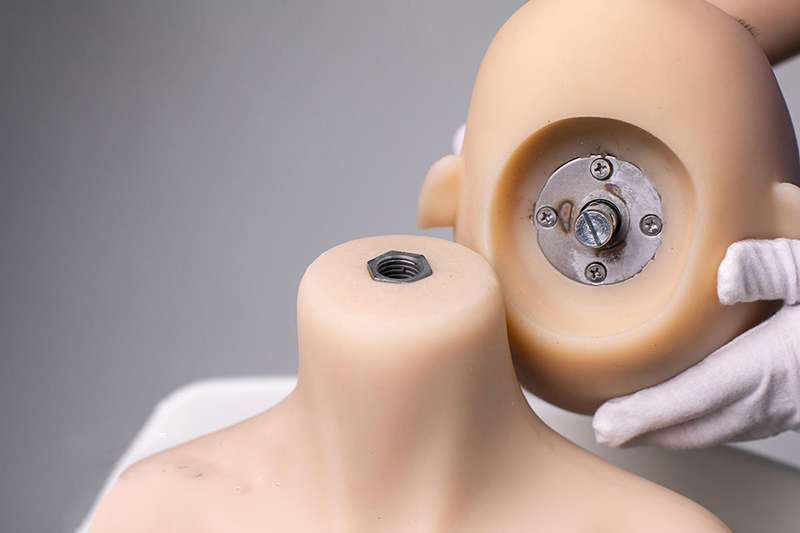
Mechanical compatibility starts with the neck connection, but it has two sides.
There is the body-side connector: the part mounted on or inside the neck area of the body. There is also the head-side socket: the receiving structure inside the head. If the buyer only checks one side, the answer is incomplete.
The practical questions are:
- What connector type does the body use?
- What head-side socket does the head have?
- Are the thread size and connector family actually the same?
- Does the head need an adapter?
- Does the head sit straight once attached?
- Does the connector hold the head securely without forcing it?
Forcing a connector is never a good plan. If the head does not seat cleanly, the issue may be thread mismatch, adapter mismatch, socket depth, connector height, or the wrong head/body pairing.
This is why a clear product page should show or explain the connector path. "Compatible" should not be a vague promise. It should tell the buyer what is being matched.
Connector Labels Help, But They Are Not The Whole Answer
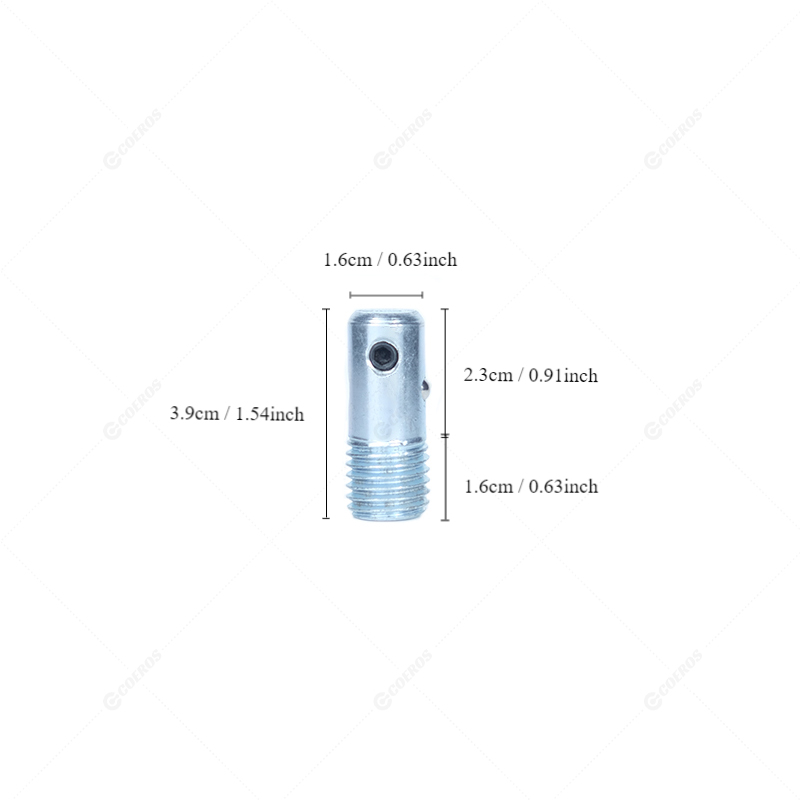
Labels such as M16, M8, screw connector, snap-on connector, or adapter can be useful. They give buyers a starting point.
But a label is not a full compatibility check.
For example, a measured connector might show details such as overall length, top width, smooth section, and lower threaded section. Those details can matter because two parts can sound similar in name but behave differently in the actual neck and socket setup.
That does not mean buyers need to become hardware engineers. It means they should ask for clear confirmation:
- Is the body-side connector compatible with the head-side socket?
- Is the thread size the same?
- Is an adapter required?
- Does the adapter change height, rotation, or stability?
- Has the seller confirmed this exact head and body combination?
The phrase "M16" can be useful. It should not be treated as a universal yes.
Screw-On, Snap-On, And Turnable Connectors
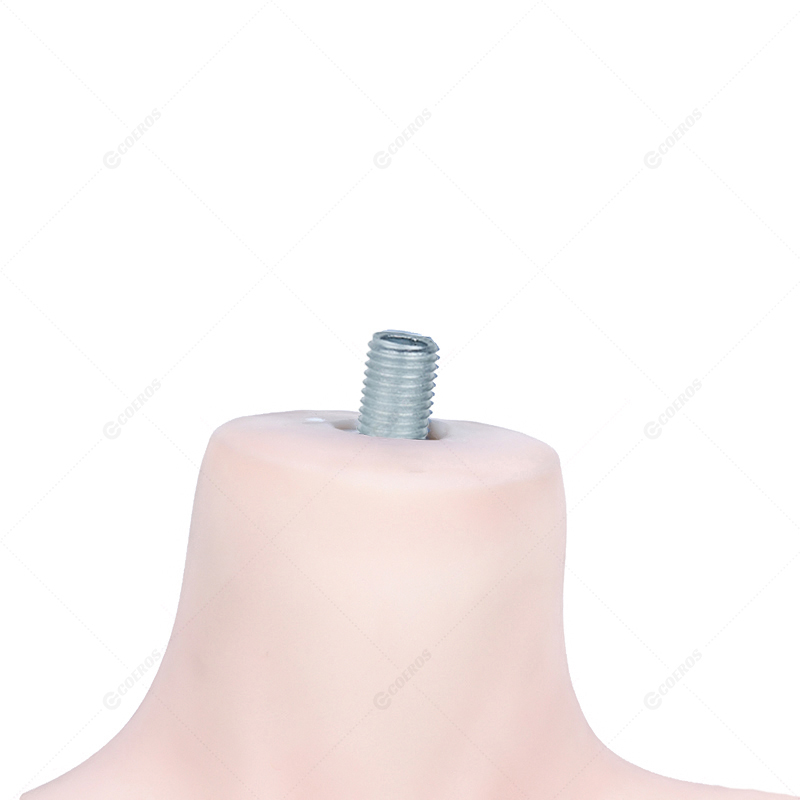
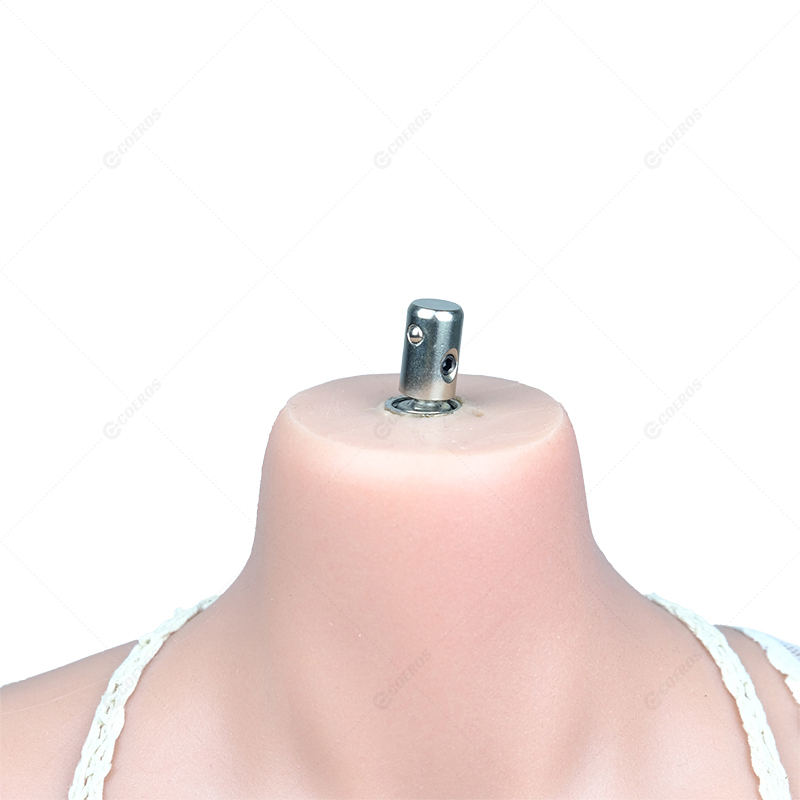
Different connector paths create different ownership tradeoffs.
A basic screw-style connector can be practical and simple. It usually gives the buyer a familiar idea: align the head, seat it carefully, and secure it without forcing the threads. The caution is that the exact thread and socket still need to match.
Snap-on or adapter paths can be helpful when a buyer is trying to bridge one connector family to another. The caution is that an adapter is not magic. It may solve one mechanical problem while introducing another question about height, seating, rotation, or stability.
Turnable or rotatable connectors can add head-position flexibility. That can matter for display, photography, or posture. But it is still a connector path that must match the exact body and head. More movement does not automatically mean broader compatibility.
| Connector path | Useful when | Main caution |
|---|---|---|
| Screw-style connector | Buyer wants a simple, direct connection | Thread and socket must match |
| Snap-on or adapter path | Buyer needs to bridge connector systems | Adapter fit still needs verification |
| Turnable / rotatable connector | Buyer wants head-position flexibility | Movement does not guarantee universal fit |
The best connector is not the most impressive-sounding one. It is the one the seller can clearly confirm for the exact head and body combination.
Visual Fit: The Part Buyers Notice After Installation
Visual compatibility is easy to underestimate because it is less technical than connectors.
But once the head is installed, visual fit becomes obvious.
A head can attach and still feel wrong if:
- the skin tone is slightly off
- the neck looks too narrow or too thick
- the head scale does not match the body size
- the face style does not suit the body proportions
- the head sits too high, too low, or at an awkward angle
- the body material and head finish do not feel visually consistent
This is especially important when mixing heads and bodies across brands or series. Even within the same general material family, tone and finish can vary. A product photo may look close enough, but the final match depends on the exact head and body.
If the head is for a specific body series, ask whether the seller has real compatibility guidance. If the head is being used across brands, be even more cautious.
Mechanical fit lets the head attach. Visual fit makes the result feel intentional.
Functional Fit: ROS, Movable Jaw, And Soft-Head Systems
Advanced head functions add another layer.
A standard head swap is mostly about connector, appearance, and seating. A functional head may involve more: soft-head construction, open-mouth structure, movable jaw design, ROS, ROS MAX, or other internal systems. Those features can change the head's structure, weight, socket behavior, and maintenance needs.
This does not mean advanced heads are bad. It means they should not be treated as plug-and-play upgrades for every body.
Ask separate questions:
- Is the function built into the head only, or does it depend on the body setup?
- Does the head need a specific connector or neck design?
- Does the soft material affect support or seating?
- Does the movable jaw or ROS structure change the head's internal space?
- Does the seller confirm this exact head works with this exact body?
For ROS-specific expectations, read What Is a ROS Head?. For broader mouth and head-function differences, see Love Doll Mouth Types and Head Function Systems Explained.
The key point is simple: advanced function should be checked as function, not assumed from connector fit.
What To Check Before Buying An Extra Or Replacement Head
Before ordering, use this checklist.
- What connector type does the body use?
- What socket or connector does the head use?
- Are the thread size, adapter path, and seating height confirmed?
- Is the head designed for the same body, same brand, or same series?
- If it is cross-brand, has the seller confirmed the exact match?
- Does the skin tone match the body closely enough?
- Does the neck size and head scale look right on the body?
- Does the head function need special support?
- Are ROS, ROS MAX, movable jaw, or soft-head features confirmed for this setup?
- What happens if the head arrives and does not fit as expected?
If a seller cannot answer these questions, treat that as useful information. Clear compatibility guidance is part of product quality.
In Short
A love doll head is compatible when it fits mechanically, visually, and functionally.
Mechanical fit means the body-side connector and head-side socket work together. Visual fit means the head looks right on the body in tone, scale, neck shape, and proportion. Functional fit means any special system, such as ROS, ROS MAX, movable jaw, or soft-head design, is actually supported.
Do not buy by connector label alone. Use the connector label as the first check, then confirm the exact head, exact body, visual match, and function support before ordering.
FAQ
Does M16 mean a love doll head is universal?
No. M16 or another connector label can be useful, but it does not confirm the head-side socket, adapter path, seating height, visual match, or advanced function support.
Can I use an adapter for a replacement head?
Sometimes, but an adapter is not a guarantee. You still need to verify thread, socket, height, seating stability, and whether the final head/body combination looks and functions correctly.
Are snap-on heads better than screw-on heads?
Not automatically. Snap-on systems can be convenient, while screw-style systems can be simple and practical. The better choice is the one confirmed for the exact head and body.
Can I put a ROS or ROS MAX head on any body?
Do not assume that. ROS and ROS MAX heads should be checked for mechanical, visual, and functional compatibility with the exact body.
Why does visual fit matter if the connector fits?
Because the head may attach but still look mismatched. Skin tone, neck width, face scale, body proportion, and head angle all affect whether the final result feels natural.
What should I ask before buying an extra head?
Ask for connector type, body-side connector, head-side socket, adapter needs, tone match, neck proportion, function support, and whether the seller confirms that exact head/body pairing.